AC Installation Cost: How to Qualify for 0% VAT Relief
AC Installation Cost: How to Qualify for 0% VAT Relief
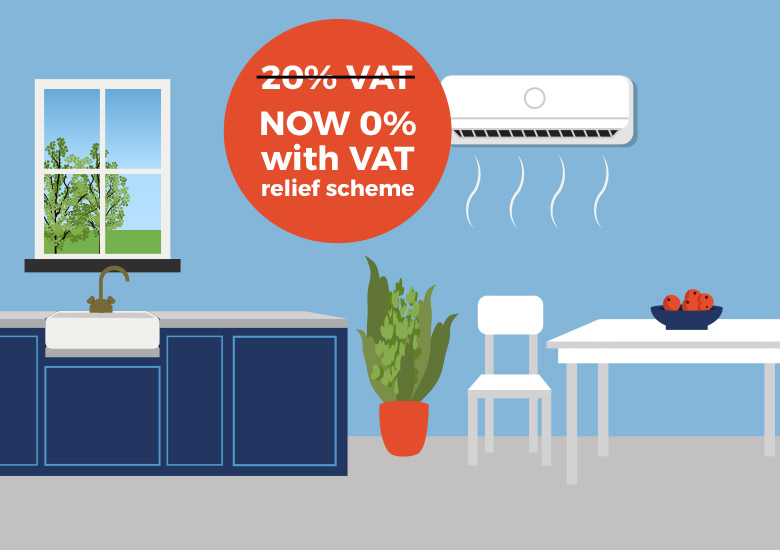
If you have been putting off air conditioning because of the upfront AC installation cost, you may be sitting on a VAT relief scheme you did not know existed. Since April 2022, a government-backed scheme has allowed eligible homeowners to have qualifying energy-efficient systems installed at 0% VAT instead of the standard 20%. For most households, that is a meaningful reduction in the total AC installation cost, and a significant enough saving to change the financial calculation entirely.
This guide breaks down exactly what the AC installation cost looks like with and without relief, who qualifies, what the rules cover, and how to make sure you are working with an accredited installer who can apply the relief correctly.
What Is the 0% VAT Relief Scheme?
The UK government introduced a temporary zero-rate VAT measure for energy-saving materials as part of its response to rising energy bills and its push toward greener homes. Originally a reduced rate of 5%, it was upgraded to 0% from 1 April 2022 until 31 March 2027 under the Energy Saving Materials relief.
Air source heat pumps are explicitly listed as qualifying energy-saving materials under the scheme. Modern air conditioning systems that operate as heat pumps, meaning they both cool in summer and heat in winter, fall within the scope of this relief. This includes inverter-driven split systems such as those made by Daikin and Bosch, which are among the most commonly installed units in UK homes.
The relief applies to both the equipment and the installation labour when supplied together by a qualifying installer. That is an important distinction. If you buy the unit separately and pay someone else to fit it, the relief may not apply in the same way. The supply and installation must typically come from the same VAT-registered contractor.
How Much Is the Typical AC Installation Cost?
The total AC installation cost varies depending on the type of system, the number of rooms, the complexity of the installation, and your location. Homeowners are often surprised by the range, so understanding what drives the price up or down is essential before requesting quotes. Here is a general breakdown of what homeowners in the UK can expect to pay in 2025.
Single Split System (One Indoor Unit)
A single-zone split system covering one room is the most common domestic installation, and typically the most affordable AC installation cost entry point. Equipment and labour combined typically ranges from £1,500 to £3,000. The unit itself accounts for roughly half of that, with the remainder covering pipework, refrigerant charge, electrical connections, and commissioning.
Multi-Split System (Multiple Indoor Units)
A multi-split setup uses one outdoor unit connected to two, three, or four indoor units across different rooms. This is popular in open-plan homes or where several bedrooms need climate control. Typical AC installation cost for a three-zone system runs from £4,500 to £8,000, depending on pipe runs and wall penetrations.
What the 0% VAT Relief Actually Saves You
At the standard rate of 20%, a £4,000 job would carry £800 of VAT on top. At 0%, that saving goes straight back into your pocket. On a larger multi-room job costing £7,000, the relief is worth £1,400. For most households, that difference is significant enough to move the decision from “maybe” to “yes.”
It is worth noting that the relief does not apply to commercial properties under the same rules, and there are some residential exceptions. Your installer should carry out a VAT eligibility check before the job begins and issue the correct VAT notice to you in writing.
Who Qualifies for 0% VAT on AC Installation Cost?
The scheme is available to homeowners and, in some circumstances, landlords of residential properties. There is no means-test or income threshold, which was a change from the original pre-2022 scheme. The key qualifying conditions are as follows.
The Property Must Be a Qualifying Residential Building
The property must be used as a dwelling, or be intended for use as one. This covers houses, flats, bungalows, and most residential conversions. Holiday lets may be excluded depending on how they are classified for VAT purposes, so always confirm with your installer.
The System Must Be a Qualifying Energy-Saving Material
Under HMRC guidance, air source heat pumps and systems that meet the definition of energy-saving materials qualify. A system that only cools and cannot heat does not meet the standard. Most modern inverter split systems sold by reputable manufacturers like Daikin do qualify because they are fully reversible heat pumps, but you should ask your installer to confirm the specific model meets HMRC requirements before you commit.
The Installation Must Be Carried Out by a Qualified Contractor
This is where things can go wrong for homeowners who shop around purely on price. The AC installation cost may appear lower from an unqualified trader, but the VAT relief will not be legally applied, and more seriously, the installation itself may be non-compliant. Under UK law, anyone handling refrigerants must hold an F-Gas qualification, and the system must be installed by a company registered with the relevant certification body.
You can verify a contractor’s F-Gas credentials through the official F-Gas Register company directory. You can also cross-check through the Refcom register of certified companies, which is another recognised certification body under the UK F-Gas regulations. Working with a contractor listed on both is the safest approach.

What Is Included in the AC Installation Cost?
When you receive a quote from a reputable air conditioning installer, the AC installation cost should be broken down clearly. Here is what a transparent quote typically covers.
Equipment Supply
The indoor unit or units and the outdoor condenser unit. Reputable installers work with branded manufacturers whose equipment carries long warranties, typically five years or more when registered through an accredited installer scheme.
Installation Labour
This includes drilling and core cutting through walls, mounting brackets, pipework runs, electrical connections, and full commissioning of the system. The time on site for a single-zone install is usually half a day to a full day.
Refrigerant and Commissioning
F-Gas compliant systems must be pressure-tested and charged correctly. This requires an engineer who holds a current F-Gas certificate, and the charge must be recorded in an F-Gas log for the equipment. This is a legal requirement, not an optional extra.
Aftercare and Warranty Registration
Many manufacturer warranty schemes require registration by an accredited installer. If you use an unaccredited fitter, you may receive the shorter standard warranty rather than the extended one, which can represent a significant difference in protection over the system’s life.
Hidden Costs to Watch for When Comparing AC Installation Cost Quotes
Not every quote for AC installation cost includes the same scope, and the difference between two quotes can be misleading if they are not covering the same work. Before comparing AC installation cost figures, make sure each quote addresses the following.
Scaffolding or Access Equipment
If the outdoor unit is to be installed at height, such as on a flat roof or high external wall, access equipment may be needed. This is sometimes excluded from base quotes and added later.
Electrical Upgrades
Modern systems require a dedicated circuit in most cases. If your consumer unit is old or lacks capacity, an upgrade may be needed. Ask whether the quote assumes the existing electrics are sufficient or includes any remedial work.
Decorating and Making Good
Internal pipe chasing and cable runs may require plastering or repainting. Some installers include making good as standard; others do not. Clarify this upfront to avoid surprises after the job.
Annual Servicing
While not part of the installation cost itself, an annual service is recommended to maintain efficiency and keep your warranty valid. Ask about service plans at the time of installation so you are budgeting accurately for the longer term.
How to Claim the 0% VAT Relief on Your AC Installation Cost
The process for claiming the relief is straightforward when you work with an accredited installer. You do not need to apply to HMRC yourself. The installer handles the VAT accounting and simply does not charge you the 20% VAT on the qualifying supply. The result is that the AC installation cost shown on your final invoice already reflects the zero rate.
What you should receive from your installer is an invoice clearly showing the zero-rate VAT applied and a written confirmation that the system meets the qualifying criteria under HMRC’s Energy Saving Materials scheme. Keep this documentation with your property records, particularly if you are a landlord or intend to sell the property in future.
If an installer quotes you a price and then adds VAT separately at 20% without any explanation, ask them directly whether the 0% VAT relief applies to your installation. A competent, accredited installer will know the rules and apply them correctly. If they cannot clearly explain the VAT treatment, that is a warning sign worth taking seriously.
Choosing the Right Installer to Keep Your AC Installation Cost Compliant
The financial saving from the 0% VAT relief is only available when the work is done correctly by a qualified company. For homeowners in Surrey and the surrounding area, finding a contractor who is both F-Gas registered and accredited by the manufacturer of the equipment you choose is the most reliable route to a compliant, efficient installation.
Always check the F-Gas Register company directory and the Refcom register before signing any agreement. Installer accreditation with manufacturers such as Daikin means the engineer has been trained to the manufacturer’s own standard, which directly affects the warranty you receive and the efficiency of the finished installation.
Hayward Heating is a Surrey-based, accredited air conditioning installer working with leading brands including Daikin and Bosch. The team holds full F-Gas certification and applies the 0% VAT relief correctly to qualifying domestic installations.
To learn more about what is involved in a residential installation, visit the air conditioning installations page. When you are ready to discuss your project and get a clear, itemised quote with the correct VAT treatment, you can contact the team of heating engineers in Surrey directly.
Summary: AC Installation Cost and 0% VAT Relief at a Glance
Understanding the true AC installation cost means looking beyond the headline figure on a quote. The 0% VAT relief available until March 2027 can reduce the cost of a qualifying installation by hundreds or even thousands of pounds. To access it, the system must be a qualifying energy-saving material, the property must be residential, and the work must be carried out by an F-Gas certified, VAT-registered contractor who knows how to apply the scheme correctly.
Taking the time to verify credentials, compare fully-scoped quotes, and understand the VAT position before signing anything will ensure that the AC installation cost you pay is as low as it legally can be, and that the system you end up with is safe, efficient, and properly warranted.